
Twenty-three-year-old Marcus sits alone in his apartment, scrolling through his phone at 2 AM. He has a college degree, a decent job, and by all traditional measures, he's doing fine. But he can't remember the last time he had a meaningful conversation with someone who wasn't a family member. He hasn't been on a date in over a year. Most nights, he falls asleep to the sound of podcast hosts he'll never meet, their voices filling the silence of his studio apartment.
Marcus isn't alone in being alone.
The Invisible Crisis
The numbers tell a story that many young men are living but few are discussing openly. According to recent surveys, nearly two-thirds of young men aged 18-29 report feeling lonely on a regular basis. Among single young men, that number climbs even higher. This isn't just about lacking a romantic partner—it's about the erosion of friendship, community, and meaningful connection across the board.
The consequences are devastating. Male suicide rates have been rising steadily, with men accounting for roughly three out of four suicide deaths in the United States. Men aged 25-34 have seen particularly alarming increases over the past two decades. For young men specifically, suicide is now one of the leading causes of death, trailing only accidents and sometimes homicide depending on age brackets.
These aren't just statistics. They're sons, brothers, friends, and classmates who felt so disconnected from the world around them that they saw no other way forward.
When the Map Doesn't Match the Territory
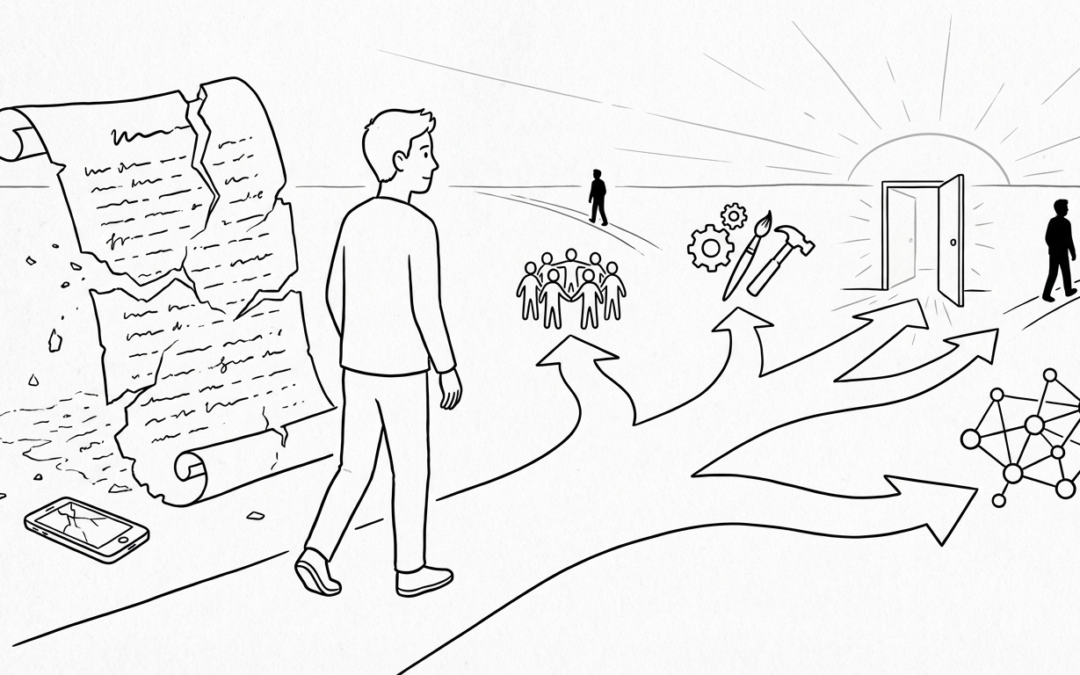
For generations, young men followed a relatively clear script: finish school, get a stable job, find a partner, start a family, become a provider. The path offered identity, purpose, and social belonging. You knew who you were supposed to be and how you were supposed to get there.
That script has fundamentally broken down, but nothing coherent has replaced it.
The economic foundation has shifted beneath their feet. The stable, well-paying jobs that once required only a high school diploma have largely disappeared. College degrees no longer guarantee financial security, yet they often come with crushing debt. Housing prices have skyrocketed beyond the reach of many young workers. The traditional timeline of independence and family formation keeps getting pushed further into the future.
The social landscape has transformed just as dramatically. Dating has been largely digitized, turning connection into a swipe-based marketplace where many young men report feeling invisible or unsuccessful. Traditional social spaces—churches, community centers, neighborhood hangouts—have hollowed out, replaced by digital interactions that often feel more isolating than fulfilling.
Meanwhile, cultural messages about masculinity have become confusing and contradictory. The old models of manhood are regularly criticized, often for good reason, but the alternatives offered are vague or sometimes seem to suggest that masculinity itself is the problem. Young men are told to be vulnerable but not weak, confident but not arrogant, ambitious but not aggressive. They're navigating a minefield with a broken compass.
The Toxic Alternative
Into this void has rushed a thriving ecosystem of online content creators who offer simple answers to complex questions. Some of these voices provide genuine value, but others peddle a particularly toxic form of masculinity wrapped in the language of self-improvement.
The appeal is obvious. When you're struggling to find your place in the world, someone who says "I have the answers" and "you've been lied to" offers a seductive clarity. These spaces promise to restore male pride, teach men to be "alpha," and blame external forces—women, feminism, society—for their struggles.
Research on online radicalization shows how effectively these spaces can capture young men's attention and gradually shift their worldview. What often begins as self-help content about fitness or career success can slowly introduce more extreme ideologies. The algorithm rewards engagement, so content becomes progressively more inflammatory, more divisive, more extreme.
These communities offer something powerful that mainstream culture often doesn't: belonging. Young men in these spaces find others who share their frustrations, validate their experiences, and provide a sense of identity and purpose. The problem is that this identity is often built on resentment, conspiracy thinking, and contempt for others.
What Comes Next: A Better Path Forward
Here's the truth that gets lost in both the old scripts and the toxic alternatives: there is another way, and it starts with rejecting false binaries.
Young men don't have to choose between outdated masculine stereotypes and abandoning their masculinity entirely. They don't have to choose between vulnerability and strength—they can embody both. They don't have to choose between self-improvement and compassion for others—these things complement each other.
The new script isn't a script at all. It's permission to build a life that's authentic to who you actually are, not who you're told you should be.
Build real community. Join groups centered on genuine interests—climbing clubs, book clubs, volunteer organizations, recreational sports teams. Show up consistently. Friendship among men requires time, proximity, and shared experience. It doesn't happen through screens alone.
Develop competence in things that matter to you. The toxic spaces are right about one thing: men often find meaning through capability and achievement. But that doesn't mean becoming a "sigma male" or whatever this week's buzzword is. It means getting genuinely skilled at things you care about, whether that's cooking, coding, carpentry, or community organizing.
Practice emotional literacy without apology. Learning to understand and articulate your inner life isn't weakness—it's a fundamental life skill. Men who can navigate their emotions and communicate them effectively have better relationships, better careers, and better mental health.
Seek mentorship and offer it. Connect with older men who embody the kind of life you want to build. And when you're ready, be that person for someone younger. Intergenerational connection used to happen naturally; now it requires intentionality.
Embrace purpose beyond yourself. The loneliness epidemic isn't solved by self-optimization alone. Meaning comes from contributing to something larger than yourself—whether that's family, community service, creative work, or political engagement.
The Possibility Ahead
The crisis facing young men is real, but it's not inevitable. Every generation has had to adapt to changing circumstances and reimagine what it means to live a good life. This moment is no different.
The old scripts are failing because the world has changed, and that's okay. What comes next is being written right now by young men who refuse both the rigid constraints of the past and the hollow promises of toxic online gurus.
It's being written by men who build genuine friendships, who pursue meaningful work, who love with vulnerability, who contribute to their communities, and who understand that their masculinity is something they get to define—not through domination or resentment, but through character, competence, and connection.
The path forward exists. It's harder than following a script and more rewarding than falling into toxic communities. It requires courage, honesty, and the willingness to do the real work of becoming yourself.
And it starts with this simple recognition: you're not alone in feeling alone, and there's another way forward.