
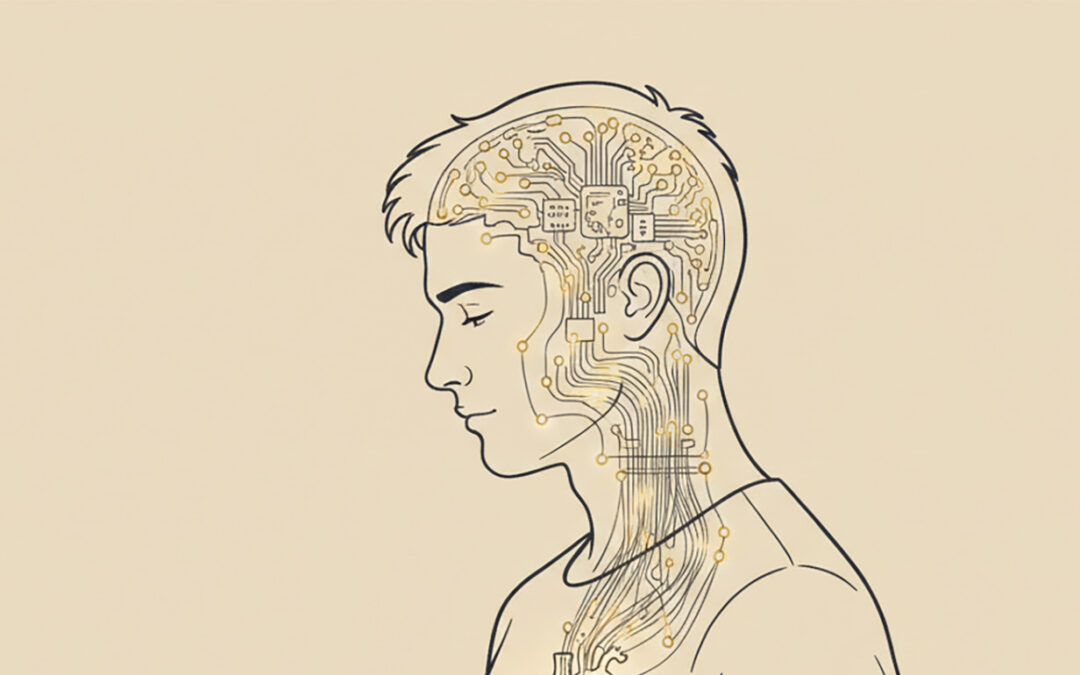
Here's something nobody tells you: ignoring your emotions doesn't make you strong. It makes you slow.
Think about your phone for a second. When it starts glitching—running slow, overheating, draining battery—you don't just ignore it and hope for the best. You check what's going on. You look at what apps are running in the background. You figure out what's wrong so you can fix it.
Your emotions work the same way. They're not character flaws or signs of weakness. They're data. They're your internal diagnostic system telling you what's happening under the hood. And just like ignoring your phone's warning signs leads to a crash, ignoring your emotional signals leads to burnout, bad decisions, and broken relationships.
Feelings Are Data, Not Character Flaws
Somewhere along the line, a lot of us got the message that having feelings—especially certain feelings like fear, sadness, or anxiety—is weak. That "real men" push through, suck it up, don't talk about it.
But here's the truth: emotions are information. They're signals from your brain telling you something important about your situation.
Anger? That's your system saying a boundary was crossed or something feels unfair.
Anxiety? That's your brain running risk assessment, trying to prepare you for what's ahead.
Sadness? That's processing loss or disappointment, which is how you eventually move forward.
Fear? That's your threat detection system keeping you safe.
Frustration? That's the gap between your expectations and reality showing you where you need to adjust.
When you ignore or suppress these signals, you're not being tough—you're flying blind. You lose access to crucial information about what you need, what's working, and what isn't. That's not strength. That's just poor system management.
The Neuroscience: Name It to Tame It
There's actual brain science backing this up, and it's surprisingly simple. When you're experiencing a strong emotion—let's say you're pissed off about something at work—your amygdala (the part of your brain responsible for emotional responses) is firing on all cylinders. It's in threat-detection mode, pumping out stress hormones, getting you ready to fight or flee.
But here's where it gets interesting: when you actually put a label on what you're feeling—when you say to yourself, "I'm feeling angry" or "I'm anxious right now"—you activate your prefrontal cortex. That's the part of your brain responsible for reasoning, problem-solving, and regulation.
Neuroscientist Dr. Dan Siegel calls this "name it to tame it." The simple act of identifying and naming your emotion reduces the intensity of the amygdala's response. It's like turning down the volume on your emotional alarm system so you can actually think clearly about what's happening.
Studies using brain imaging have shown that when people label their emotions, activity in the amygdala decreases while activity in the prefrontal cortex increases. In other words, naming what you feel literally shifts your brain from reactive mode to responsive mode. You move from being controlled by the emotion to being able to work with it.
This isn't about making the feeling disappear. It's about getting enough distance from it to make better choices about what to do next.
The Problem with "Fine"
Most guys have a pretty limited emotional vocabulary. How are you doing? "Fine." "Good." "Alright." Maybe "stressed" if things are really bad.
But "fine" tells you nothing useful. It's like your phone saying "something's wrong" without telling you whether it's the battery, the storage, or a corrupted app. You can't fix what you can't identify.
The more precisely you can name what you're feeling, the more effectively you can respond to it. There's a huge difference between "I'm stressed" and "I'm feeling overwhelmed because I have too many commitments and not enough time." The second version gives you something to work with. You can start making decisions about what to prioritize or what to let go.
Your Operating System Upgrade: The 5-Emotion Practice
Here's a practical exercise to start building your emotional literacy. It takes about two minutes, and it works because it forces you to move past autopilot and actually check in with yourself.
Set a daily reminder on your phone. When it goes off, pause what you're doing and identify five distinct emotions you're feeling right now. Write them down or type them in your notes app.
The key is specificity and variety. Don't just write "good" five times. Push yourself to find the nuances. Here's an example:
- Focused (on this project)
- Slightly anxious (about the deadline)
- Curious (about how this will turn out)
- A little hungry (probably should eat lunch)
- Satisfied (with the progress I made this morning)
Notice how each emotion points to something different? That's the data you need. Once you can see it, you can act on it. Focused means keep going. Anxious means maybe break down the deadline into smaller steps. Hungry means go eat. Satisfied means acknowledge the win before moving to the next thing.
Do this for a week. You'll be amazed at how much more clearly you start to understand yourself. You'll catch patterns you've been missing. You'll notice when certain situations or people consistently trigger certain responses. And most importantly, you'll stop being ambushed by emotions you didn't see coming.
Why This Actually Matters
Look, nobody's saying you need to sit around having feelings about your feelings all day. This isn't about becoming emotionally indulgent or oversharing everything you're experiencing.
It's about competence. It's about running your internal systems effectively so you can show up better in your relationships, make smarter decisions under pressure, and avoid the kind of emotional buildup that eventually explodes in ways you regret.
The guys who are actually crushing it—the ones building businesses, maintaining strong relationships, performing under pressure—they're not doing it by pretending they don't have emotions. They're doing it by understanding their emotions well enough to use them as information rather than being hijacked by them.
Emotional literacy isn't soft skills. It's core infrastructure. It's your operating system. And just like any operating system, it runs better when you actually know how it works.
So start naming what you feel. Get specific. Build the vocabulary. Your brain will literally rewire itself to handle emotions more effectively. And you'll stop wasting energy fighting against your own internal signals.
That's not weakness. That's optimization.
Try it today: Set a reminder right now for sometime this afternoon. When it goes off, name five emotions. See what you learn about yourself. That's your starting point.