
Jake's chest tightens during a group presentation when a classmate challenges his research methodology. His jaw clenches. His mind races with rebuttals. Later that night, he snaps at his roommate over dirty dishes. When asked what's wrong, he says "nothing" and retreats to his room. He thinks he's being strong. He's actually just running blind.
For most of his life, Jake learned that feelings were something to suppress, ignore, or power through. Emotions were the enemy of rational thinking. They were weakness. They were what you dealt with by not dealing with them at all.
He was operating his internal life like a pilot flying without instruments.
Feelings Are Data, Not Character Flaws
Here's what nobody tells you: emotions aren't obstacles to clear thinking. They're information. Your emotional system is constantly scanning your environment, your body, and your social interactions, generating signals about what matters to you, what's working, and what isn't.
When you feel anxious before a presentation, that's not a character defect. It's your nervous system signaling that something important is at stake and you need to prepare. When you feel anger after being interrupted repeatedly, that's not you being irrational. It's your internal boundary-detection system alerting you that your needs aren't being respected.
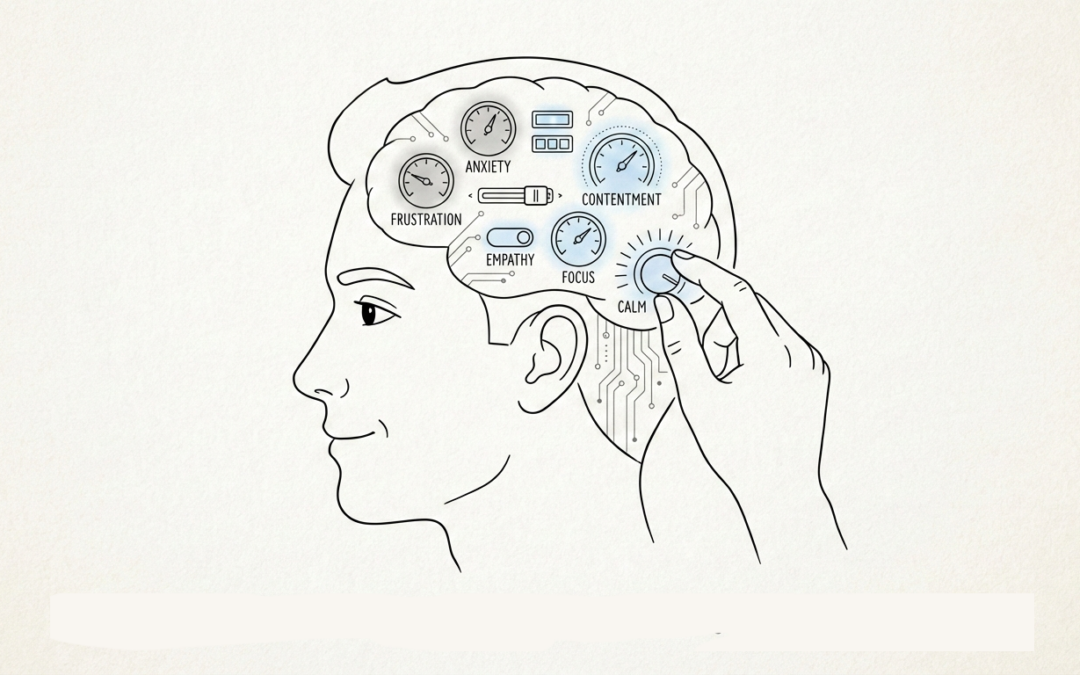
Think of emotions as your operating system. You can ignore the warning lights on your dashboard, but that doesn't make the engine problems go away. It just means you'll break down without understanding why.
The men who struggle most aren't the ones who feel things—everyone feels things. They're the ones who can't read their own internal signals. They're navigating life with a crucial sense disabled, wondering why they keep crashing into the same obstacles.
The Neuroscience of "Name It to Tame It"
Dr. Dan Siegel, a clinical professor of psychiatry at UCLA, coined the phrase "name it to tame it" to describe what happens in your brain when you identify and label your emotions.
When you experience a strong emotion, your amygdala—the brain's alarm system—activates. This triggers your fight-or-flight response: increased heart rate, shallow breathing, tunnel vision, impulsive reactions. It's terrible for navigating complex situations like academic conflicts or relationship issues.
But when you put words to what you're feeling, you activate your prefrontal cortex—the part of your brain responsible for reasoning and regulation. Brain imaging studies show that simply labeling an emotion reduces activity in the amygdala. You're literally calming your alarm system by naming what's happening.
Research by psychologist Matthew Lieberman at UCLA demonstrated that people who labeled their emotional responses showed reduced amygdala activity compared to those who didn't. The effect was measurable and consistent.
What this means practically: when you're in a heated moment and you can internally note "I'm feeling angry" or "this is anxiety," you're not wallowing in feelings. You're engaging your brain's regulatory systems. You're creating space between stimulus and response. You're upgrading from automatic reaction to conscious choice.
The Vocabulary Problem
Most men operate with an emotional vocabulary of about five words: fine, good, bad, angry, and stressed. That's like trying to navigate a city with a map that only shows "north" and "south."
Emotional granularity—the ability to distinguish between similar but distinct emotions—predicts better mental health, better relationships, and better decision-making. Someone who can differentiate between feeling disappointed, discouraged, and defeated has more options for how to respond than someone who just knows they feel "bad."
Different emotions point to different needs and different solutions. Anxiety might mean you need more preparation. Resentment might mean you need to set a boundary. Loneliness might mean you need connection. But if everything just registers as vague discomfort that you try to ignore, you can't address the actual issue.
Practical Exercise: Labeling 5 Emotions Accurately
Here's an exercise to build your emotional literacy. Over the next week, practice identifying and labeling five specific emotions when you notice them.
Start with Physical Sensation
Before you label the emotion, notice what's happening in your body:
- Where do you feel it? (chest, stomach, shoulders, jaw)
- What's the sensation? (tight, heavy, buzzing, hollow)
- What's your breathing like? (shallow, rapid, held)
Five Emotions to Practice
Choose five from this list to track:
Frustration: Things aren't working how you want, but you believe change is possible. You feel it as tension and restlessness, often building from repeated small obstacles.
Disappointment: Your expectations weren't met. There's a quality of deflation or sinking. It's softer than anger, more resigned than sad.
Anxiety: Your mind races about future possibilities, most of them negative. Your body feels activated but with nowhere to direct the energy. Different from fear—anxiety is about uncertainty, fear is about specific threats.
Resentment: Someone has crossed your boundaries repeatedly, and you haven't addressed it. It builds slowly and feels bitter, often accompanied by mental replays of the situation.
Contentment: Not excitement, but quiet satisfaction. Your body feels relaxed. Your mind isn't chasing the next thing. It's easy to miss because it's subtle, but recognizing it helps you understand what actually makes you feel good.
The Practice
When you notice one of these emotions:
- Pause for 30 seconds
- Scan your body - where and how do you feel it?
- Name it precisely - which specific emotion?
- Note the context - what triggered it? What does this tell you about what you need?
- Log it - keep notes on your phone: "Tuesday 3pm - Frustration - group project delays, felt it in jaw and shoulders"
The goal isn't to change the emotion. It's to understand the signal. You're learning to read your own internal dashboard.
From Suppression to Fluency
Building emotional literacy doesn't make you more emotional. It makes you more capable. Men with high emotional literacy aren't controlled by their feelings—they have more control precisely because they understand what they're working with.
They don't explode in anger because they felt the irritation building and addressed it earlier. They don't spiral because they recognized sadness, understood what it was telling them, and took action. They don't sabotage relationships because they can communicate their internal experience instead of acting it out.
Suppressing emotions isn't strength—it's just being unprepared for when those emotions inevitably surface in ways you can't control. Real strength is having the self-awareness to understand what you're feeling and the skill to respond effectively.
Your emotions are going to be there whether you acknowledge them or not. The question is whether you're going to use them as information or let them run your life from behind the scenes.
Start small. Pick five emotions. Track them for a week. Name what you're feeling when you're feeling it. Watch what happens when you stop flying blind and start reading your instruments.
Your operating system has been running this whole time. You're just learning to understand the language.